

Direct marketing


Our offer


Must and beverage barrel with fermentation lock and tap. Temperature resistant from -20 to +80°C Smooth inner walls and large opening for easy cleaning Robust and durable - impact and break-resistant material Easy transport thanks to handles on both sides Filling level easy to read The contents of this barrel are not protected from light! Not suitable for mash.

Bacon cutting machine for cutting bacon into cubes (6x6x6mm). ~Easy to use, processing up to 20 kg of bacon per hour. ~Dimensions: 50x10x12 cm. ~Weight: 5KG

The BAG in BOX packaging system consists of an outer box and a bag with a VITOP dispenser. Ideal for storing fruit and vegetable juices, wine... also suitable for hot filling up to 80C. Long shelf life as atmospheric oxygen is prevented from entering.The fruit juice is packaged in a flexible bag that acts as an oxygen barrier and is itself in a cardboard packaging. Protected from light and oxygen, the nutritional benefits and the aroma of the fruit juice remain fresh for several months. The bag consists of several inner films and an outer film with an oxygen barrier. The aspetic, break-proof Vitop tap makes pouring by the glass possible and at the same time prevents air from entering the bag.Juice is made sterile using heat treatment. If unopened, the juice will last for several months (approx. 6 months to 1 year). After opening the BAG in BOX and storing it in a cool place, the contents will last for another 3 weeks.
Content: 25 Stück (€0.78 / 1 Stück)

Affordable table scales with plastic platform, red LED display (5 digits, 15 mm high), tare function, weight setting selectable (standard setting gram), hold function - the last weight is displayed even after the item to be weighed has been removed, automatic switch-off function after 4 minutes without a change in weight.< br>Dimensions WxDxH: 160x230x50 mmPlatform size 154x154 mmMains connection 230 V, 50 Hz (or 9V external - power supply is included)Battery operation 6 pieces size AAAmbient temperature 0 to +40C Weight approx. 0.6 kgMaximum load 3 kgDivision 0.5 g
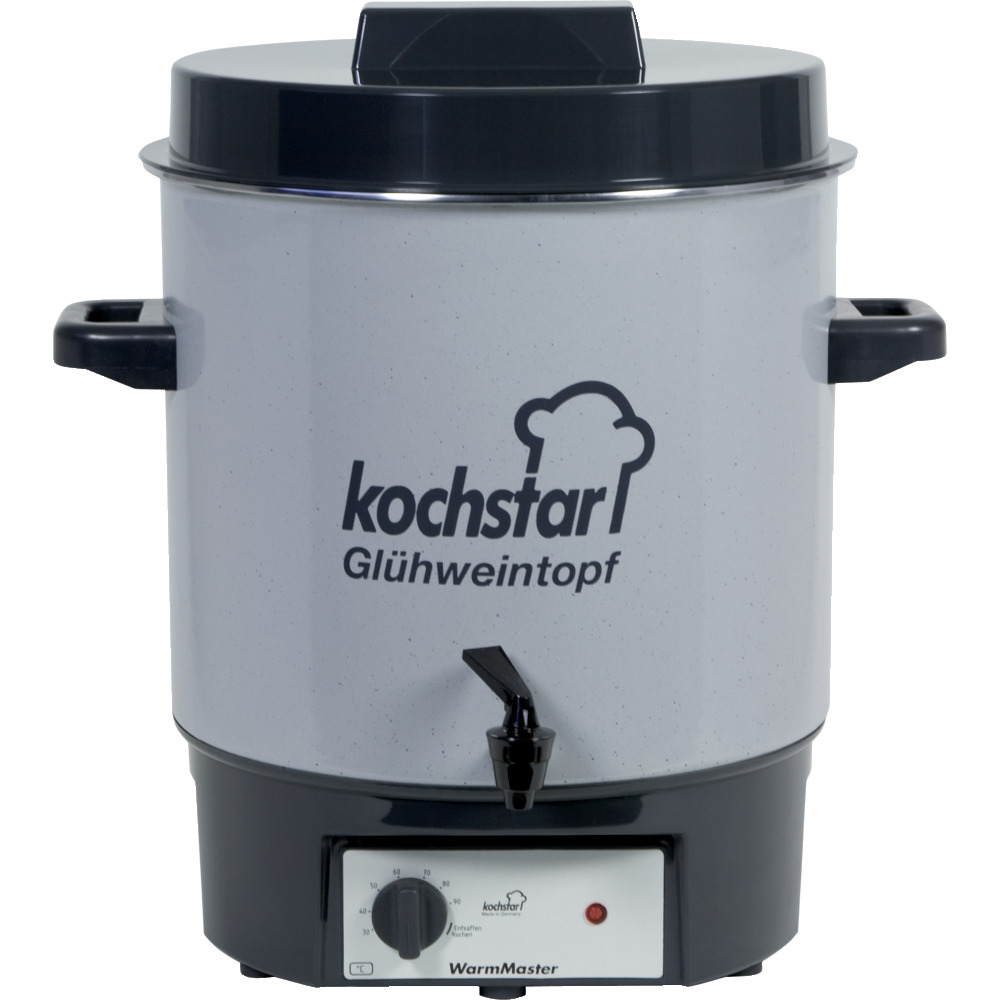
The machine with thermostat and 1/4? drain tap (plastic, without timer), also called mulled wine pot, is ideal for heating and pouring mulled wine, punch, coffee, tea, etc.You can use it to preserve various things Types of fruit, vegetables and meat and for cooking and keeping soups and stews warm, best in conjunction with the simmering insert or soup insert. The soup or stew is heated in a water bath and nothing can burn.The machine is permanently acid-proof enamelled without a timer.Suitable for 14 1l glassesContents 27l 1800 watt tubular heater, 230 V, Capillary tube thermostat and temperature monitor enamelled in silver, completed with anthracite fittings with closed base li>Lid, base and side handles made of high-quality plastic 41.5 cm Ho lid

Preserving is back in fashion! With this practical, fully automatic canner you can conveniently preserve fruit, vegetables, juices and jam. In winter it is ideal for serving hot mulled wine or punch. The set temperature is reliably maintained by the precision thermostat and drinks can be conveniently filled directly into cups using the integrated drain tap. This device is also a popular helper for keeping larger quantities of food warm at parties and events.230 V 1800 Wwith drain tapContents 27 liters or . for 14 jars of 1 liter eachwith 120 minute timer and integrated automatic preserving systempot with stainless steel rim and high-quality, acid-resistant 2-layer enamelclosed pot base for Easy to cleanTemperature regulator with precision thermostat, juicing settingOverheating and boil-dry protection, indicator lightHeat-insulating handles, integrated cable storage, with insert rackDimensions : 46 x 39 x 48 cm

Captive bolt gun nickel-plated livestock stunning device with 9 x 17 mm cartridge system for controlled stunning of livestock and delivery of a defined bolt impact in technical use. The safety system restricts use exclusively to approved cartridges and ensures compliant professional operation. Advantages and functions • 9 x 17 mm cartridge system – only approved ammunition for standard-compliant use • Nickel-plated surface – corrosion-resistant design for long service life • Defined bolt performance – approx. 82 mm bolt travel and 42–49 m/s velocity Frequently asked questions Which animal species are suitable? Pigs, sheep, calves, cows, bulls, oxen and horses. Which cartridges are allowed? Only approved 9 x 17 mm cartridges. Is proof of age required? Yes, sale only with valid proof of age (18+).

Electric bone saw for professional use and domestic use.Made entirely of stainless material, making it easy to clean and maintain. ~Technical data:Blade length: 15x 1720 mm Maximum height of the cuttings: 240 mmMotor power: 1.1 kWVoltage 400VDimensions: 48x47x83 cmWeight: 44 kg

The boot game tray made of high-quality PE tarpaulin is the ideal solution for transporting game or dirty items. It impresses with its high tear resistance, easy cleaning and, when folded, compact dimensions. It offers sufficient space and comes in a subtle green colour – perfect for hunting and private use.Dimensions: approx. 125 x 64 x 30 cm, made of 100% polyethylene, weighs only 400 g.
All Products

?The yeast nutrient salt Kombi Vita is ideal for wine lovers who want to support the fermentation process and get the maximum aroma and taste from the batch.The nutrient salt is a composition of diammonium hydrogen phosphate (DAP), vitamin B1 and inactive components of the yeast cells , which contain valuable organic substances, including vitamins from the B group.DAP is an easily assimilable source of nitrogen and phosphorus for wine yeast. ~Vitamin B1 serves as a fermentation activator, positively influencing the taste and aroma of the wine.The yeast cell walls accelerate the Reproduction of biomass and are a valuable source of sterols, fatty acids and trace elements - magnesium and manganese. They absorb fermentation-inhibiting substances. They have a positive effect on the structure and aroma of the wine. We recommend the yeast nutrient salt Kombi Vita for the production of all types of wine: fruit, grape, grain and flower wine.Application: In the ratio of 1 g yeast nutrient salt Kombi Vita to 1, Use 5-2.5 liters of must. The contents of the bag are sufficient for 15-25 liters of wine.Attention: ~Add the yeast nutrient salt Kombi Vita in three equal portions: I - before inoculation with yeast, II - after 2-3 days of fermentation, III - when the Blg in the must falls below 8-12. ~Each of these portions must be dissolved in 100 ml of must and then stirred into the wine mixture. ~Do not add the yeast nutrient salt directly to the yeast inoculation!

?For proper development, wine yeasts need not only sugar but also nitrogen and phosphorus compounds, which are present in very limited quantities in local fruit varieties. Due to this fact, hobby winemakers should use ready-made yeast nutrient salts that contain these compounds.Yeast nutrient salt for wine yeast KOMBI - contains, in addition to diammonium phosphate and vitamin B1, the extract from the cell walls of the yeast cells, which represents a specific supplement to the yeast nutrient salts, both in terms of sugar and nitrogen compounds. The cell walls show the ability to adsorb substances (including fatty acids) that have an inhibiting effect on the fermentation processes. In other words, the cell walls contribute to easy fermentation and accelerate the growth of the yeast. A 7 g pack is enough for 25 liters of wine.Application:Before you add the nutrient salt to the wine, you should mix the yeast in 1/ Dissolve 4 glasses of water. The yeast nutrient salt can be added right at the beginning of fermentation (at the same time as yeast). However, it is increasingly recommended to dose the yeast nutrient salt in three equal portions~ the 1st portion - at the beginning of fermentation, the 2nd portion - after 3 to 5 days and the 3rd portion after 10 days of fermentation. The yeast nutrient salt should be stored in a dry place. By using yeast nutrient salts when preparing the wine, the following is achieved: - appropriate proliferation of yeast - rapid initiation of the fermentation processes - complete fermentation of the fructose and the sugar added during production.

This freeze-dried yogurt culture lactic acid bacteria is used for controlled fermentation and enables yogurt production through the bacterial strains Streptococcus thermophilus and Lactobacillus bulgaricus for approx. 1 liter of milk. Advantages & Functions • Dual bacterial culture – Streptococcus thermophilus & Lactobacillus bulgaricus • Lactic acid fermentation – stable yogurt production • Freeze-dried – long shelf life and easy use Frequently Asked Questions What milk volume is it suitable for? For approx. 1 liter of milk. What do the bacteria do? They control fermentation and form yogurt texture and flavor. How is it used? Directly added to milk for fermentation.

This freeze-dried yogurt culture MILD for controlled fermentation is used for yogurt production and ensures a very mild flavor through a mixed culture of different bacterial strains with stable acidification and uniform texture development. Advantages & Functions • Freeze-dried starter culture – long shelf life and easy use • Mixed culture – balanced fermentation with multiple strains • Mild flavor profile – gentle acidification Frequently Asked Questions What milk volume is it suitable for? Designed for approx. 1 liter of milk. What does the yogurt taste like? Very mild and balanced flavor. How is it used? Directly added to milk for fermentation.

This yogurt culture YO 321 for controlled fermentation is used for yogurt production and ensures stable acidification at 38°C to 44°C with a slightly tangy flavor and firm final texture. Advantages & Functions • Thermophilic yogurt culture – optimal activity at 38–44 °C • Texture stability – produces a firmer yogurt consistency • Controlled fermentation – uniform acidification and process reliability Frequently Asked Questions What milk volume is it suitable for? Designed for approx. 50–100 liters of milk. What temperature is required? Optimal fermentation at 38°C to 44°C. What is the taste of the yogurt? Slightly tangy and typical yogurt flavor.

This yogurt culture YO 320 for controlled fermentation is used for yogurt production and ensures stable acidification at 38°C to 44°C with a mild flavor and especially creamy texture. Advantages & Functions • Thermophilic yogurt culture – optimal activity at 38–44 °C • Creamy texture – produces a smooth and full-bodied yogurt • Controlled fermentation – uniform acidification and stable quality Frequently Asked Questions What milk volume is it suitable for? Designed for approx. 50–100 liters of milk. What temperature is required? Optimal fermentation at 38°C to 44°C. What is the result difference? Milder taste and creamier yogurt structure.

More than just milk drinks: you can even make a wide variety of healthy dairy products at home using pasteurized milk from the supermarket. Their own preparation gives them a personal touch.Yoghurt and kefir, Indian lassi and Turkish ayran, sour and acidophilus milk or Swedish long milk are simply made, but so are butter and buttermilk, whey , cream cheese and soft cheese as well as quark or quark do not cause much difficulty.A variety of recipes for milk mixed drinks, tzatziki, yoghurt-based salad marinades, kefir cakes, herb butter in numerous variations, pickled cream cheese, buttermilk bread and sweet and savory delicacies made from quark (quark) round off the homemade book.Extensive information about the ingredients of milk, tips for milk consumers of all ages, traditional milk-based home remedies - such as curd wraps or whey cure - as well as recipes for further processing complement this book one of our most important staple foods.

Homemade yogurt contains no unwanted additives, no artificial flavors and less sugar, leaves no packaging waste and offers the opportunity to always enjoy freshly prepared and, above all, very special products for breakfast or at work or training that are not available in stores The introductory part contains basic recipes for various types of yogurt without additional flavoring ingredients, whether creamy or firm, whether Greek, Armenian, Bulgarian or Scandinavian, but also for buttermilk and sour milk, Russian kefir, Icelandic skyr, sour cream and cream cheese. Any type of milk is suitable as a starting product, whether lean or fat, whether animal or vegan. It can be prepared in your own kitchen without any special equipment, but commercially available yogurt makers make the work much easier. 60 creative sweet and savory recipes for home-made fermented milk products show the possible variety: The author has yogurt, buttermilk, cream cheese &~ Co prepared with flavor ingredients such as fruit or vegetables, but also refined with spices and flavors. Whether marzipan yoghurt on red wine and chocolate cherries, vegan soy dessert with dates and pecans, porcini mushroom skyr spread with sea salt or Greek yoghurt with sheep's cheese on spinach - let yourself be surprised by extraordinary taste experiences!

Make your own dairy products at home? Nothing easier than that! The author Cosima Bellersen Quirini also has a completely normal kitchen. Using simple means, she prepares yogurt, buttermilk, cream cheese, blue cheese, spicy hard cheese and much more. In this book she explains everything you need to know about processing milk and presents many tried-and-tested recipes for delicious natural products - without any flavor enhancers, preservatives or artificial flavors. Use the easy-to-understand instructions to make your own homemade dairy products: for pure, natural enjoyment from your own hands. 148 pages.

€10 voucher.
If you sign up for our newsletter.
You will receive €10 for free with your next purchase.